
If you've ever written a funding application or designed a community arts programme, you've probably found yourself trying to explain why your work matters in a particular place.
You know your community faces challenges. You see it in the young people you work with, hear it from partners and feel it in the room. But how do you translate that lived experience into the kind of evidence funders and partners want to see?
At Alira Arts, we regularly use the English Indices of Deprivation (IoD) to do exactly that. It's become one of our most valuable tools for research, planning and building partnerships across the creative sector.
The latest release, IoD25, was published in October 2025 and updates the 2019 data.
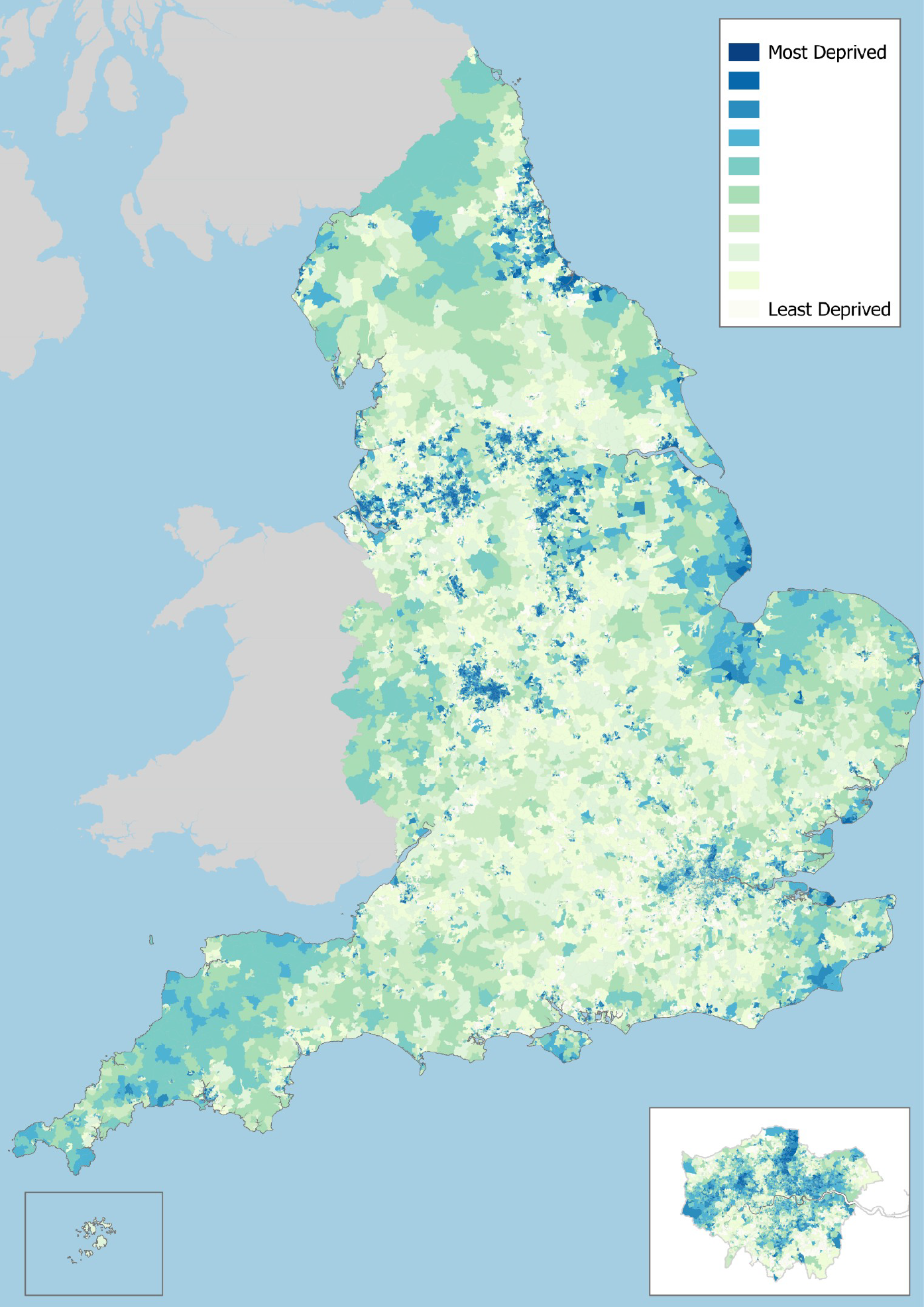
What Are the Indices of Deprivation?
The IoD25 are the UK government's official measure of relative deprivation across England. They rank every small neighbourhood, called Lower-layer Super Output Areas or LSOAs, from most to least deprived across seven different domains:
- Income (22.5%)
- Employment (22.5%)
- Education, Skills and Training (13.5%)
- Health (13.5%)
- Crime (9.3%)
- Barriers to Housing and Services (9.3%)
- Living Environment (9.3%)
These combine to create the Index, the headline figure you'll see most often. But you can also look at each domain separately, which means you can build a much more detailed picture of the specific challenges a community faces.
Why This Matters for Creative Work
Let's be honest: “Our community needs this” isn't enough for most funding applications anymore. Funders want evidence. Partners want data. And you need something more robust than anecdotal observations, no matter how accurate they are.
The IoD gives you that evidence.
Strengthening Funding Applications
Recently, we worked with an organisation in the West Midlands that runs a creative magazine and an arts journalism programme for young people.
By using IoD data, we were able to show that their target neighbourhoods weren't just “deprived” in a general sense; we could demonstrate specific, intersecting challenges:
- High Income Deprivation Affecting Children (IDACI) scores showing significant child poverty.
- Employment Deprivation data revealing barriers to work opportunities for young adults.
- Education domain indicators highlighting skills gaps.
Layering these indices together painted a complete picture of why a programme focused on developing writing, communication and media skills wasn't just “nice to have” — it was directly responding to documented local needs.
Building Strategic Partnerships
When you can say “32% of working-age adults in this area are employment-deprived” rather than simply “unemployment is high”, you're speaking the language of local authorities, regeneration agencies and other strategic partners.
It also helps identify which partners might be most relevant. High scores in Barriers to Housing? Housing associations become obvious allies. Crime domain challenges? Youth services and community safety teams.
Locating Where Activity Is Most Needed
Not sure where to focus your next project? The IoD can help you identify areas of greatest need within your region. This is particularly useful if you're working at local-authority level or across multiple neighbourhoods.

How to Access the Data (It's Easier Than You Think)
The government has created a user-friendly tool called the Local Deprivation Explorer: deprivation.communities.gov.uk
Here's how we use it:
- Enter your postcode or area name in the search box.
- View your area's profile — you'll immediately see the IMD rank and decile.
- Explore individual domains such as Employment, Education, Income and Health.
- Compare to national averages to see whether the area is in the most deprived 10%, 20%, etc.
- Download the data so you can include specific figures in applications and reports.
No spreadsheets. No statistical knowledge required. Just straightforward data you can use immediately.
What People Often Discover
The most common “aha” moment we see? “This explains why our participants face X challenge.”
You might have noticed patterns — young people struggling to find work experience, families unable to access certain opportunities, or complex needs clustering together.
The IoD often confirms what you've observed anecdotally and gives you the evidence base to act on it.
Sometimes the data surprises people too. An area might look relatively prosperous on the surface but contain pockets of significant deprivation.
Making It Work for You: Practical Tips
Type your postcode into the Explorer and familiarise yourself with the data before you need it for an application.
You don't need to cite all seven. Choose the indicators most relevant to your project.
Replace vague descriptions such as “a deprived area” with precise data and national rankings.
Reference IoD25 when using the data. It is an Accredited Official Statistic.
Combine relevant domains to demonstrate intersecting challenges rather than relying on a single headline score.
Where to Go From Here
We'd encourage you to spend 15 minutes exploring the data for your area. Type your postcode into the Local Deprivation Explorer and see what comes up.
You might be surprised by what you find — and how useful it could be for your next funding bid, partnership pitch or programme design.
We're currently developing a more detailed training session on using IoD data alongside other research tools such as Census data for cultural planning and funding applications.
The Indices of Deprivation aren't just government statistics. They're a practical tool that helps us demonstrate why creative and cultural work matters where it matters most.